
The land is in place
Sites from communities and partners with a defined status and land use.
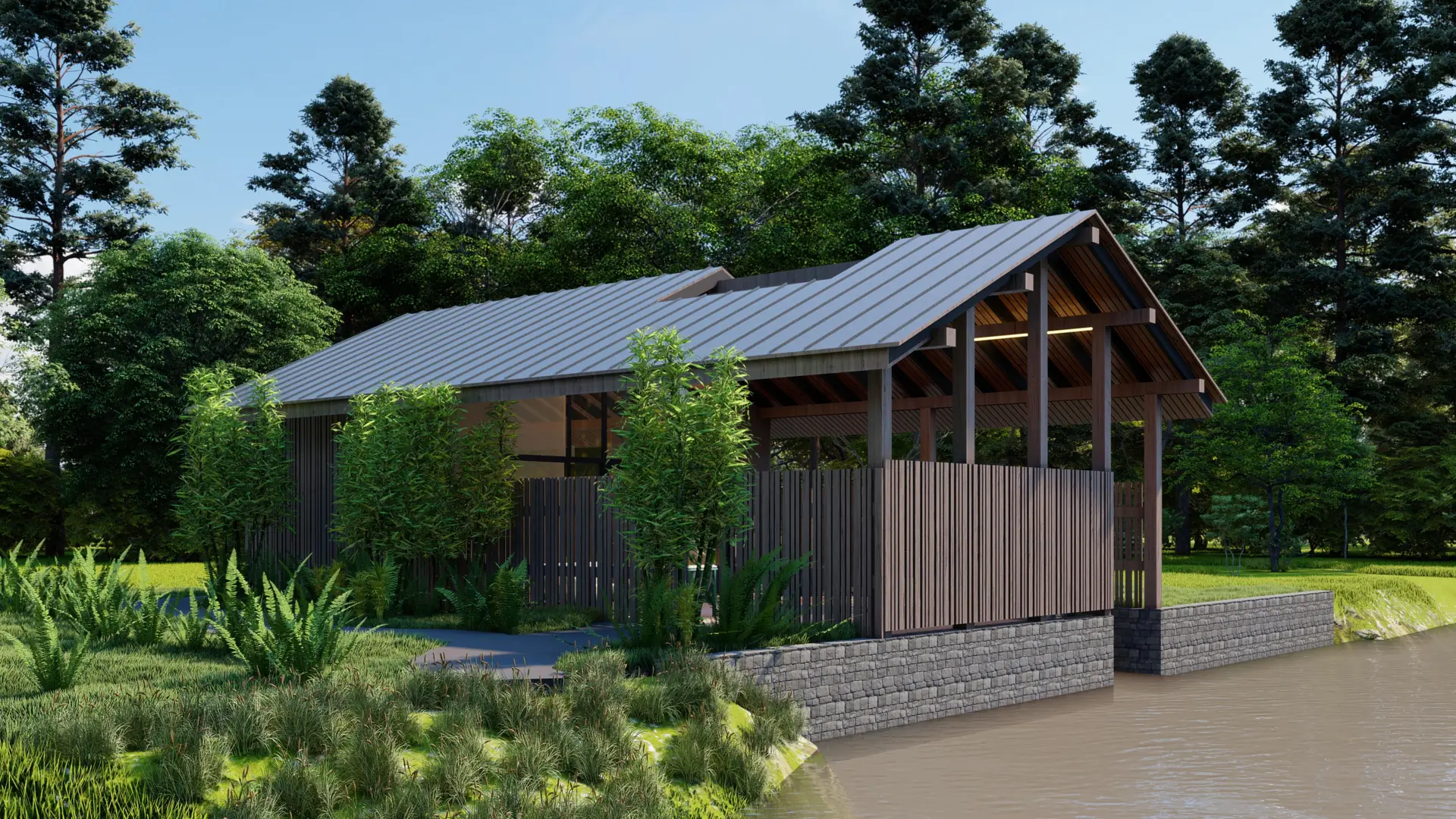
REFRAME GROUP residential, social, hospitality and industrial timber-frame projects open to partnerships and investment. Documentation, permits and manufacturing — already within one structure.
This is not a “promising market someday”. It's demand that already exists and supply that is physically lacking.
These statements are our view of the market, not investment research. Before making a decision, we recommend relying on your own verification of the data.
Land, permits, design documentation, manufacturing and confirmed demand — within one structure. An investor doesn't have to assemble it all themselves.
Sites from communities and partners with a defined status and land use.
From concept to design documentation with expert review — the stage is stated for every project.
Two production sites: we control costs and schedule ourselves, not through subcontractors.
Residents' applications are collected before construction starts — it's not a forecast, it's a list.
Modular residential real estate has a shorter cycle than conventional construction: money doesn't sit in a foundation pit for two years. Below is what an investor's path looks like in our projects.
We discuss the ticket, horizon and focus area. We share full project data.
CAPEX by phase, land and documentation status, return model, risks.
Your lawyers and technical advisers review the documents and estimates.
Project company, participation format, tranches, control and reporting.
The first phase confirms demand and cost — then we scale.
Sale of units, long-term lease or buyout of the stake by a partner.
The data on this page is for information purposes only and is not investment advice or a public offer. All figures are subject to verification during due diligence.
We agree the structure to fit your horizon and risk appetite. Below are the formats we already work in.
Project figures are approximate and are not investment advice or a public offer. Final terms are fixed after due diligence and legal structuring.
We don't pretend there are no risks. Below are the ones that genuinely affect a project, and how we reduce them.
The main one, and it can't be removed. We reduce it through the choice of region, phasing and insurance of the buildings. We don't offer projects in frontline regions.
We tie the estimate to the investment currency and contract key materials at the start. This doesn't remove the risk completely, but it takes it out of operations.
The most common reason for failures in development. That's why we only take sites with a defined status into the portfolio and honestly state the documentation stage for every project.
We collect residents' applications and community decisions before construction starts. If there is no confirmed demand, the project doesn't leave the concept stage.
Manufacturing is in-house, not subcontracted, so we control costs and schedule ourselves. That's the main reason the deadlines in our schedules hold.
The exit is planned in advance: buyout by the community, sale to end residents or leasing out. We fix the return model in the contract, not “after the fact”.
Tell us your ticket and focus area — we'll send a selection of investment-ready projects and the Investment Deck for the ones that interest you.
What the Investment Deck includes
Get the Investment Deck
Tell us your ticket, focus area and participation format — we'll send a selection of investment-ready projects and the Deck for the ones that interest you.
Tell us about your expected ticket and focus area — we'll come back with a selection of projects, a deal structure and the Investment Deck for the ones that interest you.